
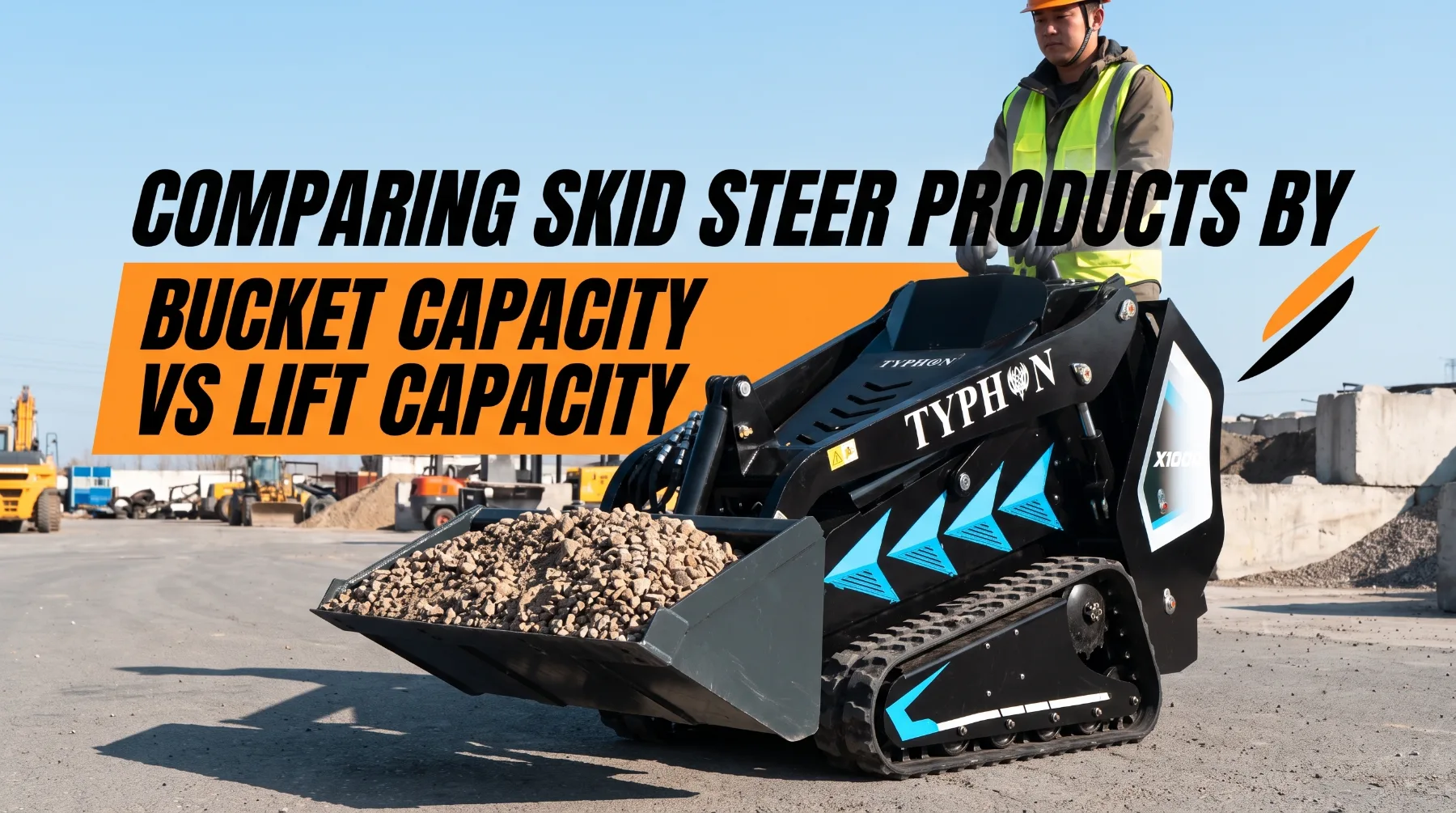
Comparing Skid Steer Products by Bucket Capacity vs Lift Capacity
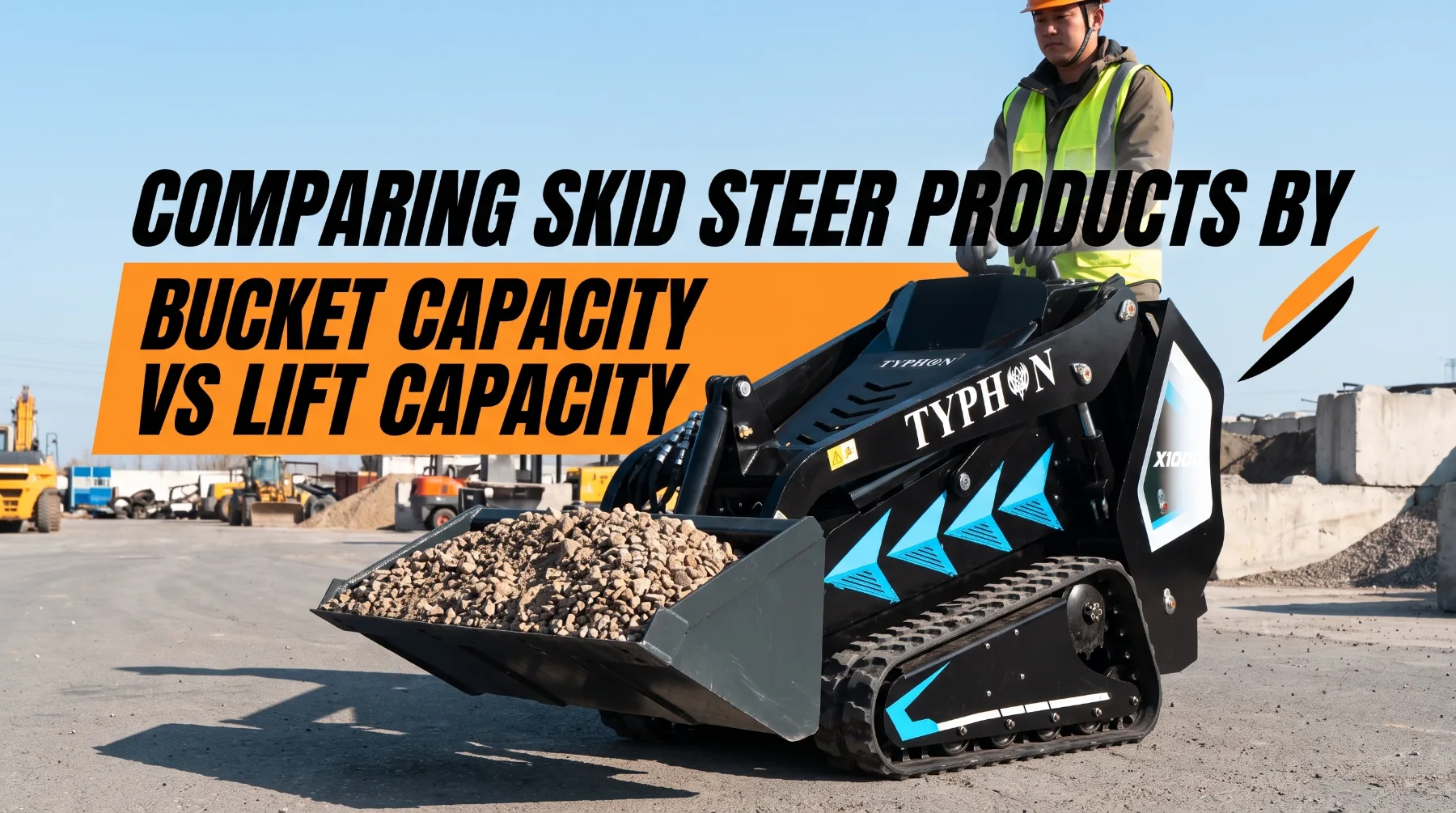 Bucket capacity and lift capacity are closely connected, but they measure two very different aspects of skid steer performance. Bucket capacity determines how much material the attachment can hold, while lift capacity indicates how much weight the machine can raise and handle during operation. A larger bucket can move more material per cycle, but that advantage only matters if the skid steer has enough lifting capability, engine power, and hydraulic performance to handle the resulting load. The relationship between these two specifications becomes especially important when working with dense or heavy materials. A bucket that appears productive on paper can become a limitation if the machine struggles to lift or carry it when fully loaded. On the other hand, a skid steer with substantial lift capacity may not reach its full productivity potential when paired with a bucket that is too small. Looking at both specifications together provides a clearer picture of how the machine will perform in real working conditions and helps identify a setup that offers the right balance of capacity, control, efficiency, and productivity.
What Bucket Capacity Actually Measures
Bucket capacity tells you how much volume the bucket can hold, typically expressed in cubic feet or cubic yards. That sounds straightforward, but volume alone does not tell the full story. The same bucket that handles dry topsoil with ease can push the machine to its limits when filled with wet clay or crushed stone, because material density changes the actual weight even when the volume stays the same. Manufacturers use two different ways to express bucket volume. Struck capacity measures material level with the rim. Heaped capacity accounts for a natural mound above it. These are not the same number, and the difference matters when comparing models side by side. Always confirm which measurement each spec sheet uses so you are working from an equal baseline.
What Lift Capacity Actually Measures
Lift capacity, usually listed as rated operating capacity or ROC, defines the maximum load a skid steer can safely raise and transport. It is set as a percentage of the machine's tipping load, with 35 and 50 percent being the two most common thresholds depending on manufacturer standard and regional practice. That percentage is not just a footnote. A machine rated at 50 percent of tipping load carries a narrower safety buffer than one rated at 35 percent, even if the headline ROC number reads higher. Before you place two machines side by side, confirm which standard each uses. Comparing a 35-percent ROC against a 50-percent ROC without adjusting for that difference produces a misleading picture.
How Bucket and Lift Specs Connect
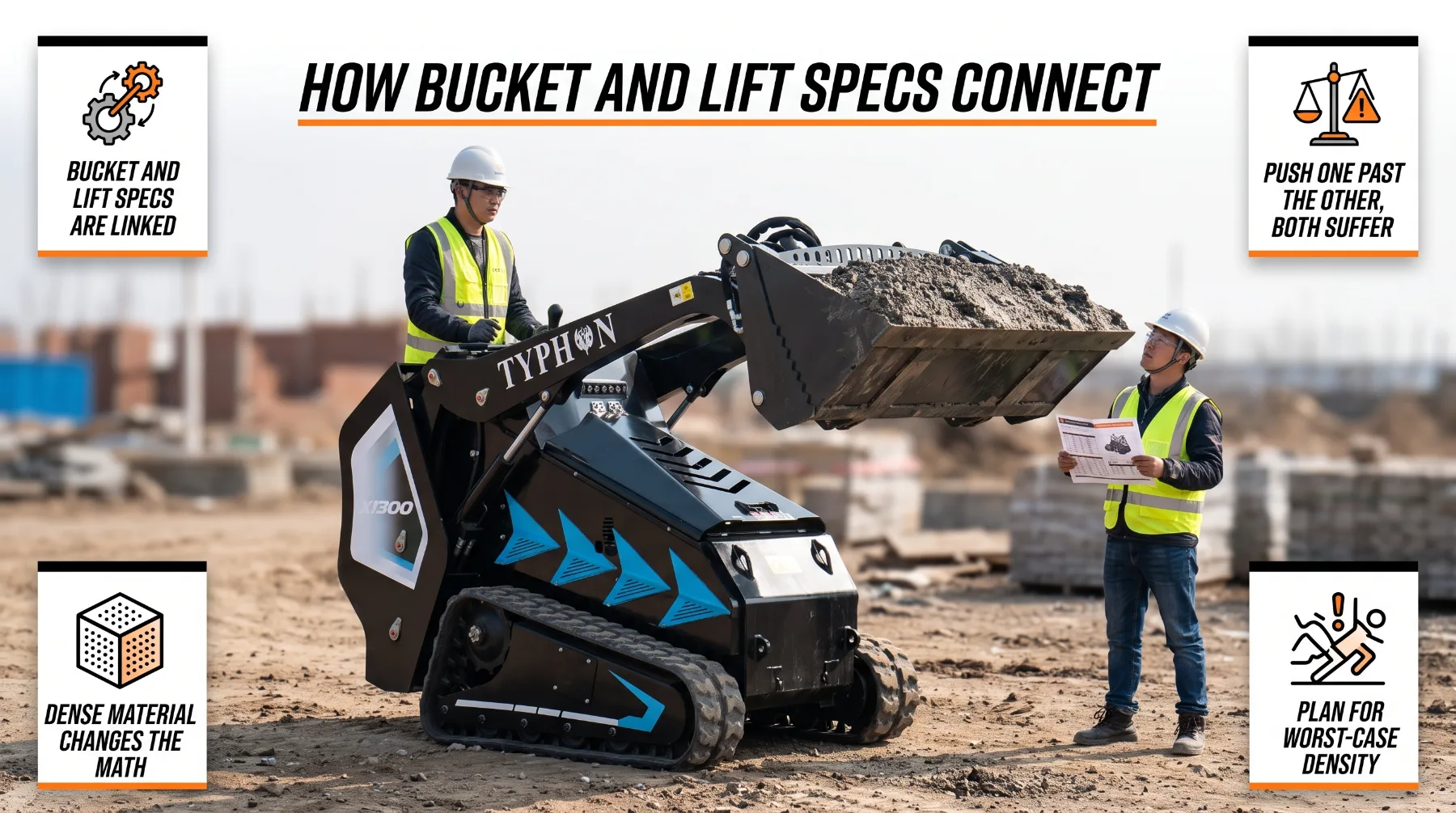 These two numbers are not independent variables. They are linked directly by the work the machine does. The bucket determines how much material gets loaded in a single pass. The lift capacity determines whether the machine can move that load without crossing into unsafe territory. Push one beyond what the other can support, and the whole system suffers. Material choice adds another layer to this connection. A bucket dialed in for landscaping mulch may exceed the lift limit when packed with the same volume of dense gravel. The numbers on the spec sheet assume a general use case. Your job is to apply them to the actual materials your crew moves, not an abstract average. Think worst-case density, not best-case.
What Mismatched Specs Cost You
An oversized bucket paired with a lower ROC creates a quiet but persistent safety problem on the jobsite. A full scoop of heavy material can tip the load past the rated limit without the operator realizing it. The rear of the machine lightens, steering response weakens, and the risk of a tip-forward event rises. The only safe fix is to under-fill the bucket on every pass, which means paying for capacity you can never fully use. The reverse scenario is subtler but equally wasteful. A machine with a high ROC matched to an undersized bucket can never apply its lifting strength in one trip. Every cycle moves less than the machine is built to handle, so the crew runs more passes to shift the same volume of material. The lift capacity sits unused, and productivity suffers despite the impressive rating.
How to Compare Models Correctly
Start your comparison with the material you move most often, and the heaviest material you move at all. Calculate the approximate weight of a full, realistic bucket load of that material, then stack that figure against the ROC for each machine you are considering. The goal is a full bucket that lands well below the rated limit, preserving the safety buffer the manufacturer built in. From there, standardize your inputs. Confirm that you are comparing struck to struck or heaped to heaped on the bucket side, and verify the tipping-load percentage behind each ROC. A comparison built on inconsistent baselines will lead you to the wrong machine just as surely as ignoring one spec entirely. Discipline at this stage saves you from expensive regret later.
How Balance Shapes Jobsite Performance
A skid steer with well-matched specs moves through its work cycle cleanly. The bucket fills completely, the lift arm raises without laboring, and the operator drops into a steady rhythm. Loads pile up quickly not because any one pass is extraordinary, but because every pass runs at full potential without interruption or hesitation.
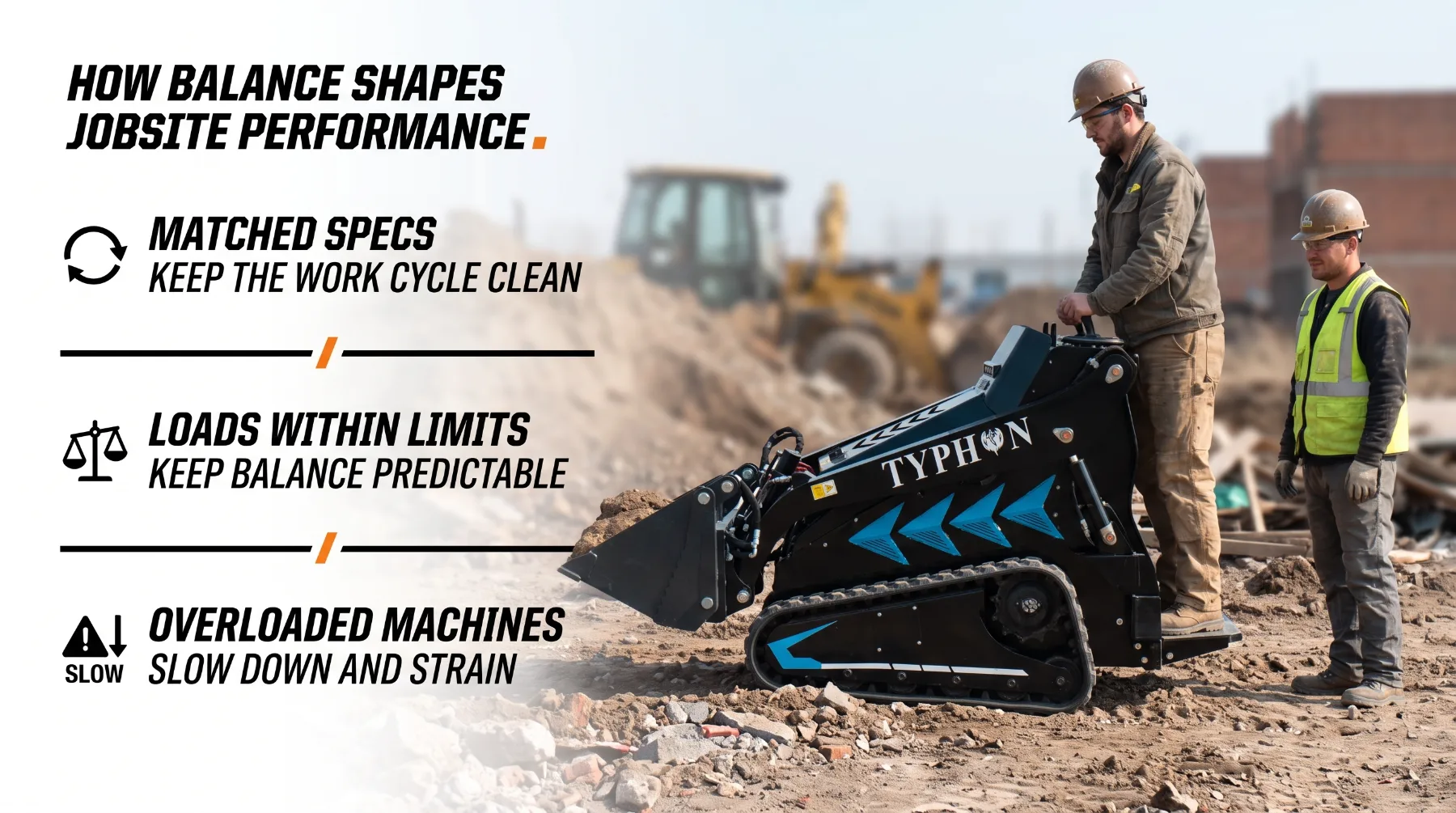 Stability is where this balance shows up most visibly. A load within the rated capacity keeps the machine's weight distribution predictable, even on grades or uneven terrain. When the load pushes toward or past the limit, the operator has to slow down, compensate for the shifting balance point, and move with more caution. The machine covers less ground, takes longer per cycle, and delivers less than it promised on paper.
What the Operator Feels
A well-matched skid steer is immediately noticeable from the seat. Controls respond cleanly, the lift arm rises with authority, and the operator never needs to mentally calculate how much material is safe to pick up. That confidence allows the crew to focus on the task rather than on managing the machine's limitations. Pace stays high, and sustained attention stays on the job. When specs are out of balance, the operator becomes the compensating mechanism. They guess at fill levels, adjust speed to manage instability, and take mental notes on which pockets of material are too dense for a full scoop. That constant calculation drains cognitive energy across a shift and leads to slower decisions and earlier fatigue, both of which cut into the crew's real output.
Long-Term Durability
Every time a skid steer carries a load within its rated capacity, the hydraulic system, lift arms, and drivetrain work as engineered. Components wear at the pace the manufacturer designed for, and the machine reaches the end of its service life on schedule. That predictability makes maintenance planning easier and keeps the machine out of the shop when it is needed most. Chronic overloading compresses that timeline. Hydraulic seals degrade faster under repeated excess pressure. Lift arm welds develop fatigue. Tires wear unevenly when the weight balance shifts forward too often. These effects accumulate gradually, which makes them easy to overlook until a repair bill or unexpected failure makes them impossible to ignore. A machine used within its matched limits simply costs less to keep running year after year.
Conclusion
Bucket capacity and lift capacity are not two specifications competing for attention. They are part of the same working system, and a skid steer is only as capable as the relationship between what its bucket can hold and what its lift arm can safely carry. When these specifications are properly matched, the machine can move material more efficiently, maintain better stability, reduce unnecessary strain on the hydraulic and lifting components, and provide more predictable handling throughout the workday. A machine that balances bucket size with realistic lifting capability will generally perform more effectively and consistently than a mismatched alternative, no matter how impressive either specification may look on its own. Do the homework before you buy by identifying the materials you will handle, calculating their realistic load weight, and confirming that the bucket and lift ratings are based on consistent measurement standards. The right skid steer is not simply the one with the largest bucket or highest lift rating. It is the one that can handle your heaviest realistic load with sufficient capacity remaining, cycle after cycle, without operating continuously at its limits.
Frequently Asked Questions
Is a bigger bucket always better on a skid steer? Not when the lift capacity cannot support a full load of your material. An oversized bucket forces under-filling to stay within the safe limit, which erases the productivity gain. A bucket sized to the ROC lets the operator fill completely on every pass, which typically moves more material per hour than a larger bucket working at partial capacity. How do I know if my bucket and lift capacity are well matched? Calculate the weight of a full bucket of the densest material you regularly move. That number should fall clearly below the machine's rated operating capacity. If it meets or exceeds the ROC, the bucket is too large for that application, and you will be under-filling it on every heavy pass to stay safe. Why does the tipping-load percentage matter when comparing ROC figures? Because the safety margin built into the ROC depends entirely on that percentage. At 50 percent of tipping load, the buffer between rated capacity and instability is smaller than at 35 percent. Two machines with the same headline ROC may offer very different real-world margins depending on which standard was used to calculate it.